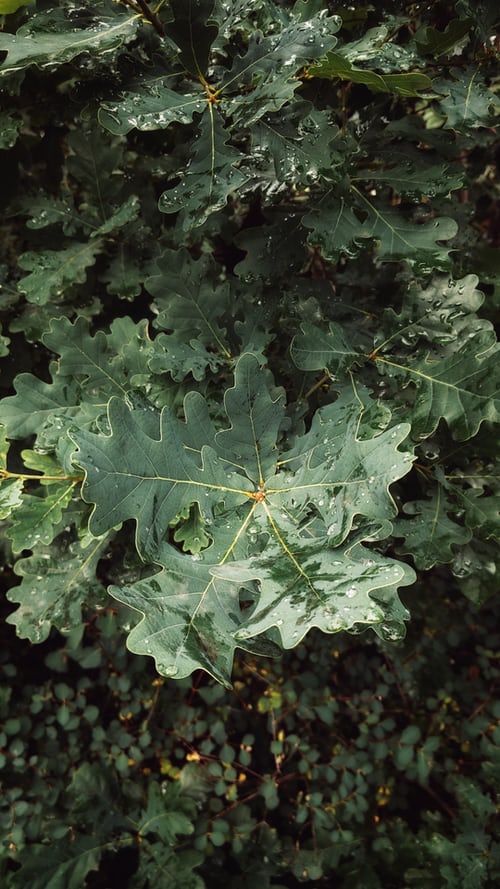
The grand old English Oak tree, Quercus Robar, is one of the most recognised species of tree in the UK. The Oak holds a special place in the history of England and in our culture. Couples would marry beneath the branches of an oak, druids worshiped in oak groves and the traditional yule log decorated with holly and mistletoe was cut from oak. The timber has always been prized for its strength has been and is still used for building houses, ships and furniture. Oak galls were used to produce ink and acorns were carried by folk as good luck charms and to bring good health! All aspects of the oak have been used and cherished by people for centuries and hopefully it will continue to be so for years to come.
An oak forest supports more diversity and abundance of life forms than any other native forest to the UK. The contribution they make to the ecosystem is invaluable, the English Oak supports an astounding 2,300 wildlife species and 326 of these depend on the Oak for their survival!
Both male and female oak flowers grow on the tree, the flowers are eaten by squirrels and a variety of insects including the dark-crimson underwing moth, which rely solely on oak, and the Oak mining bee, which is a UK BAP priority species, feeds on the pollen on the flowers.
Once pollination has taken place the female flowers then turn into acorns, they are a favourite for many wildlife species. The Jay is perhaps the most impressive of the species that enjoy the fruit of the oak, they are mad about acorns, what they can’t eat they bury to save for later, in an average month a single Jay can plant up to 3200 acorns! They do eat most of them but they also miss lots too and these missed acorns then have the chance to grow into new oak trees.
Oak leaves first appear around April time and feed a variety of species such as the great oak beauty moth that feeds exclusively on oak. The new leaves also attract aphids which produce honeydew, a sugary substance that wood ants love to feed on. The abundance of invertebrates provides for a large diversity of birds and mammals which in turn provide for higher predators on the food chain.
The oaks bark is smooth and grey/ brown in colour when the trees are young and then as it matures the bark thickens – eventually the bark will begin to loosen creating holes and creases that provide perfect environments for wildlife to shelter, feed and breed in. These niches provide excellent habitats for species such as the Barbastelle bat, and the elusive Treecreeper. Beneath the bark lie species such as the cobweb beetle, named because it steals its food from the cobwebs of spiders, and brown tree ants which almost exclusively nest in old oak trees.
The roots of the oak tree are generally shallow within the top 30cm of soil and they extend well beyond the crown of the tree. They live in symbiotic relationship with the mycorrhizal network of fungi to gather nutrients from beyond the roots reach. Species such as penny bun, orange oak bolette and oakbug milkcap can often be seen fruiting beneath oaks.
It’s not just the living tree that supports the wildlife, as the trees get older, they gradually die, decaying and dead wood is one of the woods most important microhabitats and a vital part of a woodland’s biodiversity. But unfortunately, most Oak trees in Britain are felled before they reach maturity. All three of our native woodpecker’s nest in oak and often choose dead wood as it is easier to create holes in, it’s also great for bat roosts, squirrel dens and nesting birds like the tawny owl. Not to mention the unbelievable abundance of invertebrates and fungi that thrive on the dead wood of oaks.
The Oak is under more pressure than ever, between urban development, pests and diseases and climate change they have quite the battle on their hands. The loss of oaks to our landscape would be more devastating than most people realise.